Water home
     
Are you hooked?
By Myen Ngyuyen and Hilde Soerlie    
Like many other big cities in the world, Delhi is suffering a water crisis. Delhi is now sourcing water from neighbouring states, from distances as far as 350 km away. Due to the physical network of pipelines, water distribution in Delhi is extremely uneven. Only those who are hooked on to the pipes benefit from the public water supply. The question is; are you hooked?

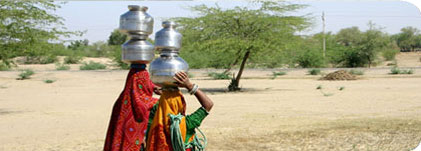
Studies show that while the wealthy areas of Delhi receive 462 litres of water per capita per day, the poor suburban areas only get 29 litres per capita per day, way below the minimum daily requirement of 40 litres. Due to the shortage of water, poor people are forced to get their water supply from private sources.

“In reality, the government is subsidising the rich, while the poor have to pay ten times more for their water”, says Salahuddin Saiphy, water expert at the Centre for Science and Environment (CSE). Despite the production cost of Rs. 8.9 for 1000 litres (kilolitre), the Delhi government only charges Rs. 2 per kilolitre. The poor, unconnected to this 'official' water supply have to pay more -- Rs. 300- 600 for the same amount of water from the private water companies. The poorest are the ones who pay the most for their water. The same conlusion was also reached in UNDP's Human Development Report in 2006

Photo: CSE library
     

Slums
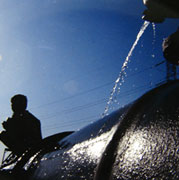
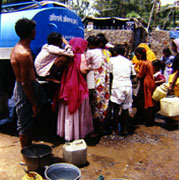
Since the Delhi government does not legitimize squatter settlements and unauthorized colonies, pipelines have not been established in the slums. In some areas, official water tankers are provided, but the amount of water supplied is insufficient. Regardless of the family size, each family gets 115 litres a day. Conflicts over water are becoming more common in Delhi's slums. Water is becoming an everyday hassle. Often people have to get water in other ways than what the government offers, some of them illegally.

Water theft
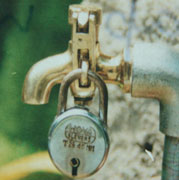
The highly uneven distribution of water has led to illegal connections. In fact, the Delhi government considers water theft a major problem, since only 50 to 80 percent of the water supplied reaches the consumers -- those with piped water supply. The government blames the poor. “If you give people water, why would they steal water?” Salahuddin Saiphy from CSE says. “Just give people water,” is his point.


Photo: CSE library
     
“If you give people water, why would they steal water?” Salahuddin Saiphy from CSE simply says; “Just give people water”.  
Photo: CSE library