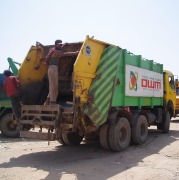
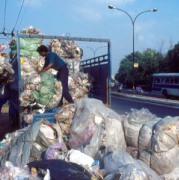
In India, waste management is implemented by each municipality. Municipal Solid Waste Management Rules 2000 regulates city-wide implementation of door-to-door collection of garbage, segregation of waste, composting of organics, recycling and reuse. It also create well-managed and safe landfill sites. It came into effect in 2004, but in reality most of the municipalities can still not implement these rules. According to the Ministry of Environment and Forests, the average efficiency of waste collection in Indian cities is around 72% (1989) and 70% of cities do not have sufficient facility of waste transportation system.
In Indian cities, garbage is usually gathered at common collection points and transported to a given disposal site. Still the problem is that there is no segregation of garbage at the collection points and it becomes very difficult to recycle it properly at the landfills. At the landfill sites the garbage is segregated by both rag -pickers and private companies. Rag-pickers are poor people working daily with segregation of garbage. The private sector is a threat to rag-pickers opportunity to pick up recyclables and keep their substantial daily-base income. This is due to interference in the already well implemented system of informal rag-pickers.
|